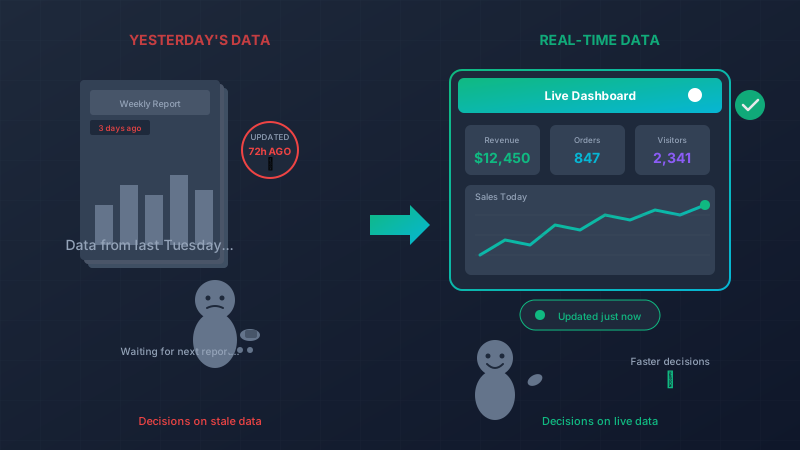
Real-Time Dashboards: Stop Waiting for Yesterday's Numbers
It’s Monday morning. You need to know how sales are tracking against your weekly target. So you:
- Open your CRM and export last week’s data
- Pull inventory numbers from another system
- Grab shipping stats from your fulfillment platform
- Paste everything into a spreadsheet
- Build some formulas to make sense of it all
By the time you’re done, it’s 10:30am. And the data is already outdated.
This is how most businesses operate—making decisions based on yesterday’s numbers (or last week’s, or last month’s). But in a world that moves in real-time, that lag can be the difference between catching a problem early and discovering a disaster.
The Cost of Stale Data
When your data is hours or days old, you’re essentially driving by looking in the rearview mirror. Consider:
Inventory management: You think you have 50 units in stock because that’s what the morning report said. But 30 sold in the last two hours. Now you’re promising customers something you can’t deliver.
Sales performance: Your top rep is having a rough week, but you won’t know until Friday’s report. By then, a coaching conversation could have turned things around.
Cash flow: Payments came in this morning, but your dashboard still shows yesterday’s balance. You delay a vendor payment unnecessarily, damaging a relationship.
Customer issues: Support tickets are spiking around a new feature bug, but your weekly metrics won’t surface it for days. Customers churn while you’re in the dark.
What “Real-Time” Actually Means
Let’s be clear: real-time doesn’t mean “updated every hour” or even “updated every five minutes.” It means instant—the moment something changes, everyone who needs to know, knows.
With Phoenix LiveView, this isn’t just possible—it’s surprisingly simple:
defmodule DashboardLive do
  use Phoenix.LiveView

  def mount(_params, _session, socket) do
    # Subscribe to business events
    Phoenix.PubSub.subscribe(MyApp.PubSub, "sales")
    Phoenix.PubSub.subscribe(MyApp.PubSub, "inventory")
    Phoenix.PubSub.subscribe(MyApp.PubSub, "support")

    {:ok, assign(socket,
      sales_today: Sales.today_total(),
      inventory_alerts: Inventory.low_stock_count(),
      open_tickets: Support.open_count()
    )}
  end

  def handle_info({:sale_completed, amount}, socket) do
    # Dashboard updates the instant a sale happens
    {:noreply, update(socket, :sales_today, &(&1 + amount))}
  end

  def handle_info({:inventory_alert, _item}, socket) do
    {:noreply, assign(socket, inventory_alerts: Inventory.low_stock_count())}
  end
end
When a sale closes, every dashboard viewing that metric updates instantly. No refresh button. No waiting. No stale data.
A Tale of Two Warehouses
Let me tell you about two distribution companies we’ve observed:
Company A runs on spreadsheets and daily reports. Their warehouse manager prints inventory levels each morning and uses that sheet all day. By afternoon, it’s fiction. They regularly discover stockouts when a picker can’t find product. Rush orders to suppliers are common. Customers get backorder notices after they’ve already paid.
Company B has a real-time dashboard on a monitor in the warehouse. The moment inventory drops below threshold, it turns yellow. Below critical? It turns red and alerts the purchasing manager automatically. They haven’t had an unexpected stockout in 18 months.
Same industry. Same challenges. Completely different outcomes.
Beyond Numbers: Real-Time Context
The best dashboards don’t just show numbers—they show context and trends:
defmodule SalesMetrics do
  def dashboard_data do
    %{
      today: today_total(),
      vs_yesterday: compare_to_yesterday(),
      vs_same_day_last_week: compare_to_last_week(),
      hourly_trend: hourly_breakdown(),
      top_products: top_selling_today(),
      goal_progress: progress_to_daily_goal()
    }
  end

  defp compare_to_yesterday do
    today = today_total()
    yesterday_same_time = yesterday_total_by_hour(current_hour())

    percentage_change(yesterday_same_time, today)
  end
end
Now your dashboard doesn’t just say “Sales: $12,450.” It says:
- $12,450 today
- ↑ 15% vs yesterday at this time
- ↓ 3% vs same day last week
- 67% to daily goal
- Top seller: Widget Pro (47 units)
That’s actionable intelligence, not just numbers.
The Power of Shared Visibility
Here’s something spreadsheets can never do: show everyone the same truth at the same time.
When your sales team, warehouse staff, and executives all see the same real-time dashboard:
- Alignment happens naturally – Everyone knows the score
- Problems surface faster – More eyes catch more issues
- Accountability is automatic – Numbers don’t lie or hide
- Communication overhead drops – No more “what’s the latest number?”
We’ve seen teams eliminate entire categories of status meetings after implementing real-time dashboards. Why meet to share numbers when everyone already sees them?
What Should Be Real-Time?
Not everything needs instant updates. Focus on metrics where timing matters:
High-Value Real-Time Metrics
- Sales and revenue (especially during promotions or launches)
- Inventory levels for fast-moving items
- Support ticket volume and response times
- Website/app errors and performance
- Cash position and payment processing
- Production line output and quality metrics
Fine as Daily/Weekly
- Employee vacation balances
- Long-term trend analysis
- Annual budget tracking
- Historical comparisons
The rule of thumb: If knowing sooner would change what you do, it should be real-time.
Building Your Real-Time Dashboard
The technical side is actually the easy part with modern tools. The harder work is deciding:
-
What matters most? – Limit your dashboard to 5-7 key metrics. More than that becomes noise.
-
Who needs to see what? – Sales needs different data than warehouse than executives.
-
What triggers action? – Set thresholds that mean something. When this number hits X, we do Y.
-
How will you display it? – A dashboard nobody looks at is worthless. Monitors in common areas, mobile access, or integration with tools people already use.
The ROI of Knowing Now
Real-time visibility pays off in ways that are hard to measure but impossible to ignore:
- Faster response to problems – Minutes instead of days
- Better customer experience – Issues caught before customers notice
- Smarter inventory management – Right stock, right time, less capital tied up
- Improved team performance – Real-time feedback drives real-time improvement
- Reduced anxiety – Knowing beats wondering
One client told us: “I used to spend my weekends worried about what I’d find Monday morning. Now I know exactly where we stand, all the time. I actually relax on weekends.”
You can’t put a price on that.
From Reports to Reality
The shift from periodic reports to real-time dashboards is more than a technology upgrade—it’s a fundamental change in how you run your business.
Reports tell you what happened. Dashboards tell you what’s happening.
Reports create lag. Dashboards create responsiveness.
Reports get stale. Dashboards stay current.
If you’re still making decisions based on yesterday’s numbers, you’re competing with one hand tied behind your back.
Ready to See Your Business in Real-Time?
Imagine opening your laptop tomorrow morning and instantly seeing:
- Exactly how yesterday finished and how today is starting
- Any issues that need your attention right now
- Progress toward your goals, updated to this second
- The same view your whole team is working from
That’s not a fantasy. That’s Tuesday, once you have the right tools.
Let’s talk about what real-time visibility could look like for your business. We’ll help you identify the metrics that matter and build dashboards that actually get used.
The best time to know what’s happening in your business is right now. The second best time is also right now. Stop waiting for reports.
Live Demo: Real-Time Inventory
This interactive component demonstrates how we combine Phoenix LiveView for real-time updates with Svelte for smooth client-side interactions. Try it out – in a production app, these changes would sync instantly across all connected users.